Why Were 38,000 South African Insurance Claims Rejected?
Sun May 31 2026
Insurance is meant to provide financial protection when life takes an unexpected turn. Yet according to data released by the Association for Savings and Investment South Africa (ASISA), approximately 38,000 life insurance claims were rejected in South Africa during 2025.
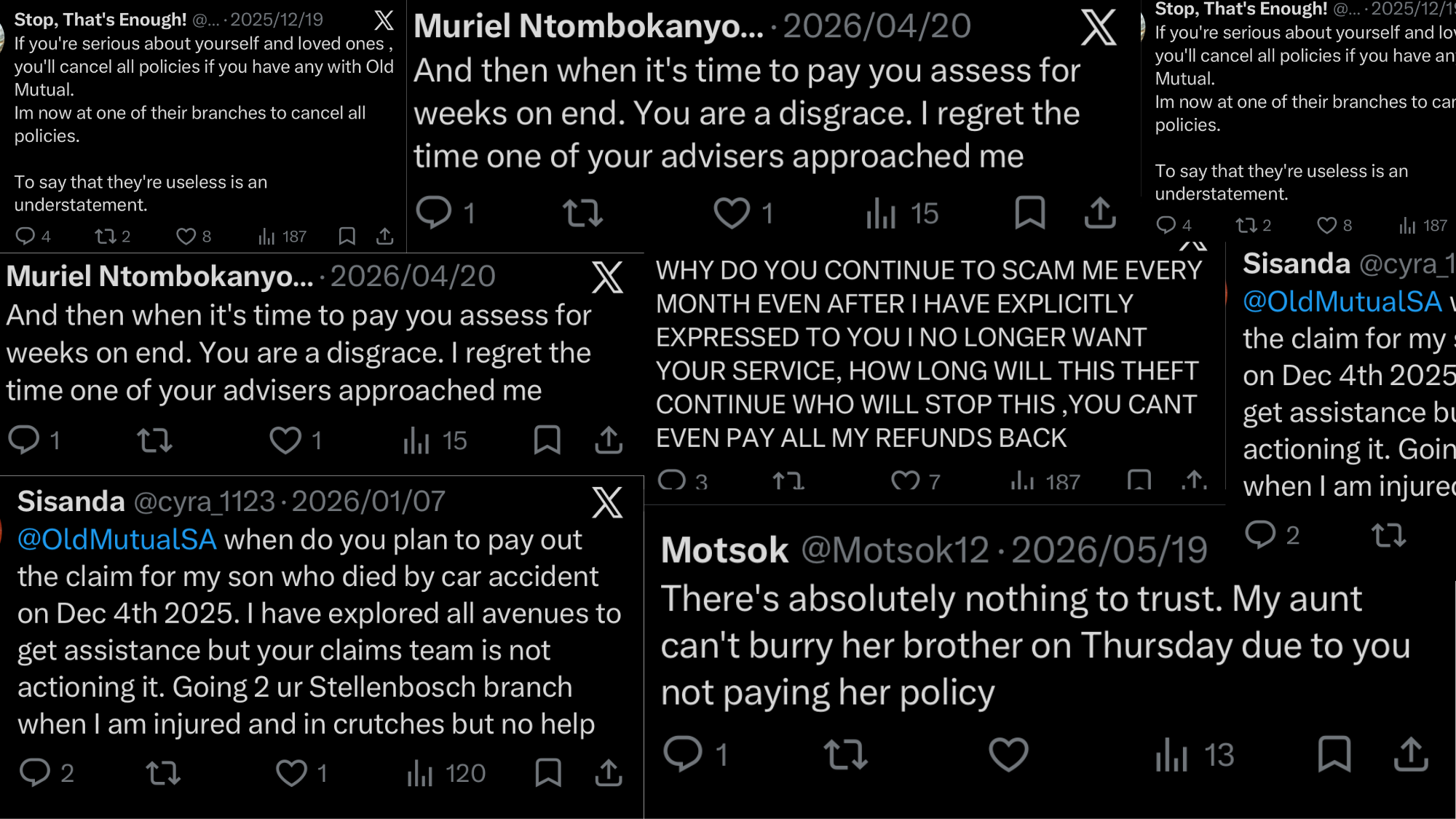
For many families, a rejected claim can come as a devastating surprise—especially when they believed they were covered.
The reality is that most claim rejections happen because of conditions, exclusions, or limitations that were already written into the policy but were not fully understood by the policyholder.
Here are some of the most common reasons life insurance claims are denied.
Suicide Exclusions
Many life insurance policies contain a suicide exclusion clause. This means that if the policyholder dies by suicide within a specified period—typically the first two years after the policy begins—the insurer may reject the claim.
These clauses are standard across much of the insurance industry and are designed to protect insurers from fraudulent applications.
Pre-Existing Health Conditions
When applying for life insurance, insurers assess your health profile and medical history.
If you have a serious medical condition when taking out the policy, the insurer may:
Exclude deaths related to that condition Charge higher premiums Limit certain benefits
If a claim arises from a condition specifically excluded in the policy, it may be rejected.
Dangerous Activities and Lifestyle Risks
Insurance policies often contain exclusions for high-risk activities.
Examples may include:
Motorcycle racing Extreme sports Driving under the influence of alcohol or drugs Other hazardous activities
If a death occurs while participating in an excluded activity, the insurer may deny the claim.
Waiting Periods
Many insurance products include waiting periods.
A waiting period is the time between the start of your policy and when certain benefits become active. If an event occurs during this period, the insurer may not pay out the claim.
Waiting periods vary between insurers and products, making it important to understand exactly when your cover becomes effective.
Why So Many Policyholders Are Caught Off Guard
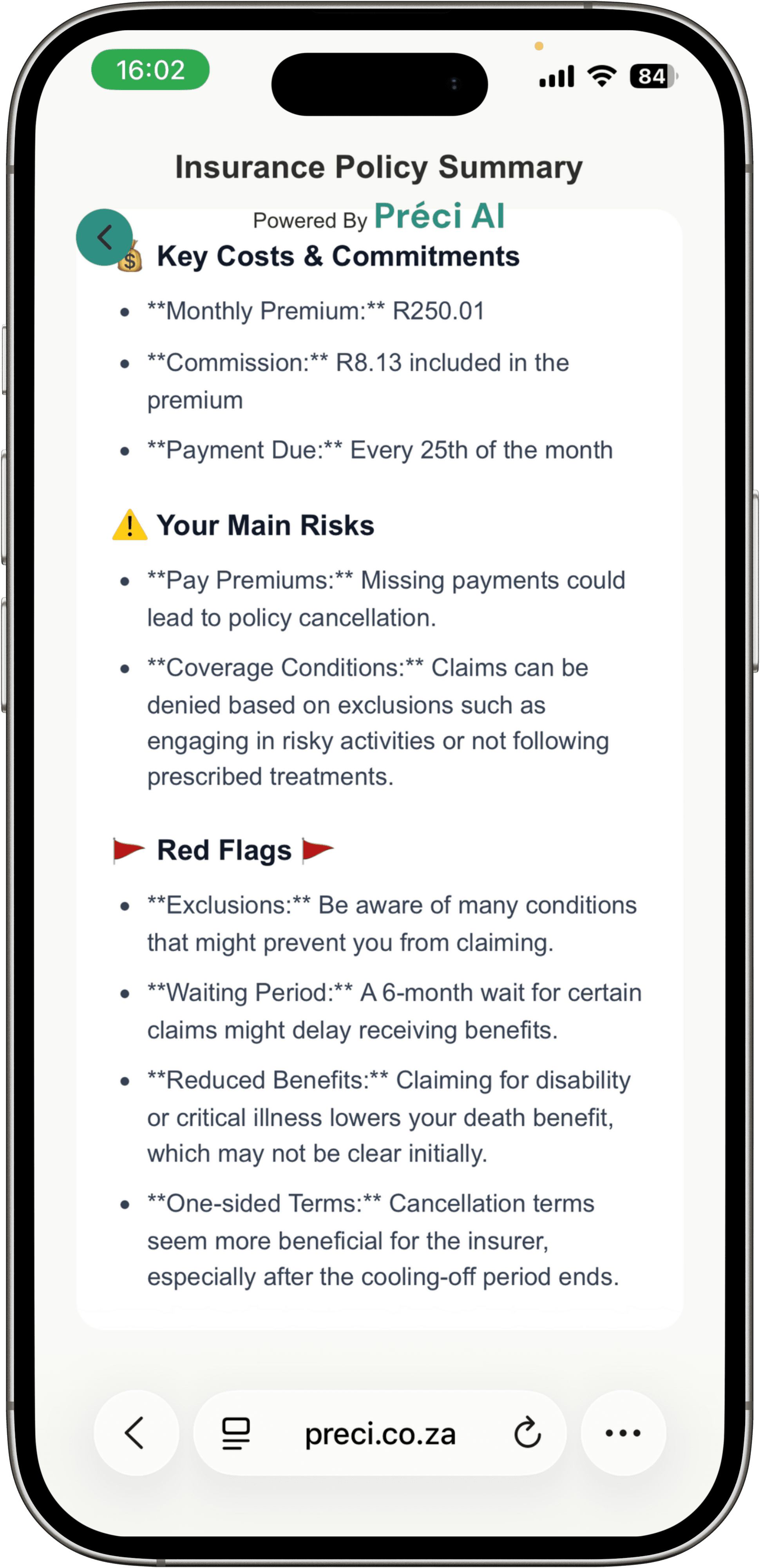
The problem is not always the policy itself—it is often that policyholders don't fully understand the terms, exclusions, waiting periods, and conditions hidden within lengthy insurance documents.
Most people only discover these details when they need to submit a claim, and by then it may be too late.
Before You Need to Claim, Understand Your Policy
Every insurance policy contains important information that can affect whether a claim is approved or rejected.
Before you find yourself in a stressful claims process, take the time to understand:
What is covered What is excluded Any waiting periods Health-related limitations High-risk activity exclusions Important claim requirements Use Preci to Understand Your Policy
Stop Guessing What Your Contract Says
Join thousands of South Africans making sense of their agreements before the lack of understanding costs the thousands of rands.